
The Fear
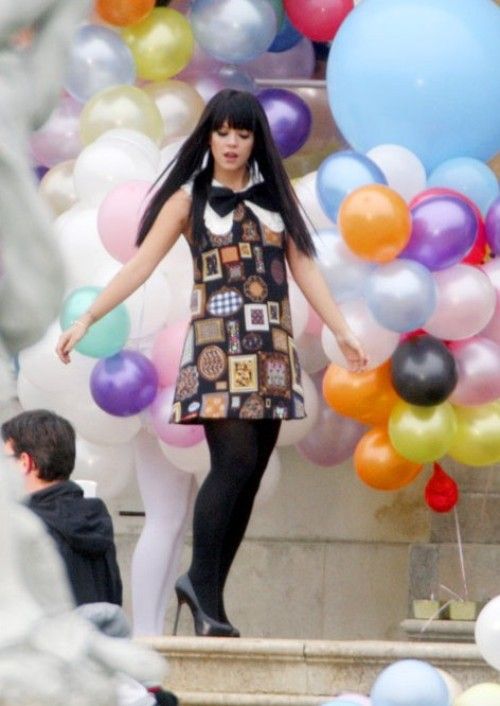
“I wanna be rich, and I want lots of money. I don’t care about clever; I don’t care about funny. I want loads of clothes and fuckloads of diamonds, I hear people die while they’re trying to find them. And I’ll take my clothes off, and it will be shameless, ‘cause everyone knows that’s how you get famous. I’ll look at The Sun, and I’ll look in The Mirror, I’m on the right track, yeah, I’m on to a winner.”
“I don’t know what’s right and what’s real anymore, and I don’t know how I’m meant to feel anymore, and when do you think it will all become clear? ‘cause I’m being taken over by The Fear.”
There is a particular honesty in how Lily Allen opens her 2008 single “The Fear”. The song resonates as the voice of a young woman listing her simple desires with a kind of glitter-soaked candour that not only openly admits her fanciful wants, but also the terror of what it might take to achieve them.
I recall hearing this song on rotation on MTV and falling instantly in love with that straightforwardness and that charming sarcasm that poked fun at the things that I at the time found and still find absurd: consumerism, celebrity obsession, forced identity and the unchecked power of mass media.
At the time I was in the midst of finding my own values and identity. This process started with and was modulated by the influence of American liberalism through the lens of rock and more broadly “guitar” music. At the time that meant an obsession with the intersection of the sonic tectonic plates of punk, industrial, post hardcore, and alt indie. Thus, with the foolishness that only youth should support, I was embarrassed with myself for enjoying such “trivially commercial girly nonsense”.
Upon more mature reflection, what made this song so personally and culturally resonant is not its celebrity references or tabloid-laden anxieties, but its tone and ethos. Within its bubbly production, the listener is faced with a confession that excellently captures the contradictory impulses of a generation raised on the promise of upward mobility while contending with the reality of its precarity. The song embodies the same type of working-class imagination that drove me to want to become “a somebody”, while being aware that my aspirations were probably hovering in the realm of delusion. Beneath the track’s playfulness I now rediscover a familiar tension: the fear of wanting itself as a class atavism.
Growing up in the Lumpenproletariat underclass I was taught to keep my desires modest, my ambitions reasonable, to give my all but expect little in return.
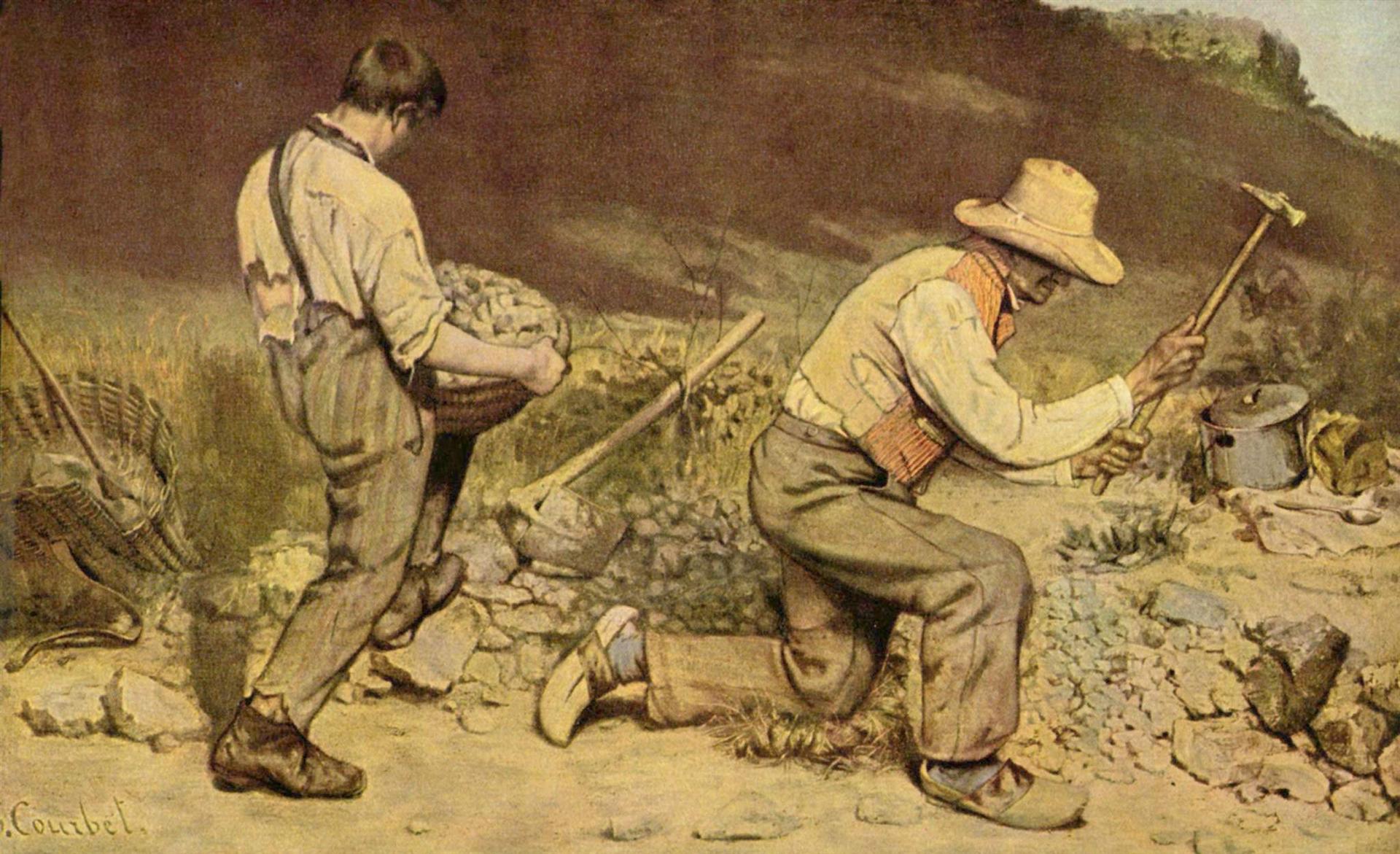
As I started understanding my inherited place in the world, I also understood that for someone like me, to want too much is risky. To want openly is to risk exposure. To express yourself freely brings with it the risk of being seen, and with that the potential of being humiliated.
I recognize what would become the person I am today in the push-pull mechanics the song employs. I recognize myself in the tremor beneath the melody, in the fear of wanting, the fear of being seen as stepping outside my station, the fear of being ostracized for wanting or liking “the wrong things”. These contradictions represent the beginning of an ongoing process of deprogramming myself from my cultural inheritance and the perpetual messaging that the establishment has been assaulting our psyches with since the dawn of mass culture.
Thus, this song becomes, for me, a chorus to the examination of the seemingly small, persistent fears that can shape the mind of anyone growing up outside the sanctioned pathways of artistic legitimacy. The core of this text is concerned with this constant oscillation between desire and dread, confidence and self-mockery, aspiration and self-sabotage.
The Metamodernist Manifesto (2011) speaks a lot of this oscillation, as an obligatory process and state of being induced by postmodernism, but also, as a cure for the incomprehensible reality of our manifold truth. “The present is a symptom of the twin birth of immediacy and obsolescence.” The only state to be in is one where we oscillate between all emotions and contradictory realities they create within us, a “mercurial condition between and beyond irony and sincerity, naivety and knowingness, relativism and truth, optimism and doubt, in pursuit of a plurality of disparate and elusive horizons. We must go forth and oscillate!”
While these specific challenges, and the reflections that come bundled with them, used to apply mostly to artists and creatives, the smartphone and social media era has made it so that most of us are acting as authors, visual artists and public figures. Everyone has a public now, and as such many have to contend with a version of The Fear.
And so, with the catchy hooks of pop music behind us, I venture to investigate The Fear, a sensation which that footnote of pop music history seems to have understood long before I knew I was feeling it. And, if you’ll indulge my deluge, I might even be able to provide some of the lessons that have enabled me to survive its takeover for the last three or so decades.
I won’t assign my developmental socioeconomic environment and precarious relationship with my family as the sole source of my shortcomings. It would be easy to frame the matter in a grand, operatic set of Freudian clichés, and while I am sure these facets contribute to my fear, this investigation is looking for the quieter tremors: The fear of exposure. The fear of stepping forward. The fear of saying “this is mine, this is me, this is what I think.”
To start from the basics, psychologically and physiologically, fear is the oldest, most basic human emotion. It is conditioned by a central part of the brain known as the amygdala which regulates a number of autonomous responses that have ensured the proliferation of our species and many others. The amygdala is also connected to the hypothalamus where long-term memories are formed. Fear learning is one of the fastest, most deeply engrained forms or learning as it supports the rapid development of risk-mitigating behaviours. What was once one of the main drivers of behaviour for animals for millions of years is now the basis of many unsubstantiated doubts and neuroses for the mighty thinking ape.
In my own practice, I constantly live with a plethora of doubts. Whether it is the fear of being misread, the fear of being laughed at, the dread of appearing ludicrous, or even worse, the possibility of being labelled “cringe” (a modern, secular excommunication of those who fail in controlling their pathos), all bring a deep sense of internalised humiliation.
Out of all of these, the fear of being genuinely uninteresting, of having nothing truly engaging to say or an interesting way of saying it, is perhaps the one I find most paralysing.
Roland Barthes understood this type of fear intimately. In “Camera Lucida”, he writes not only about the photograph but, how it related to his mother. In very Lacanian fashion, mothers can be seen as our first audience, our first critic. The mother’s gaze is the original mirror in which the child learns to see themselves, and it is the mirror we can never truly escape.
No matter how much praise or recognition my work receives, no matter how self-assured I might be in my eye, my taste, my skill, there is still that infinitesimally small part of me that wonders if my own mother would find a certain work compelling and dreads her disappointment at the kind of self-important, intellectual “degenerate” I have become. Lucidly, I know that I have outgrown her perspective; but emotionally, naturally, I still crave her attention and appreciation.
I believe that the more we live, the more these fears and insecurities hide and spiral beneath the surface, revealing themselves to the keen-eyed in the small admissions of defeat in our everyday lives. A half-finished essay never to be published because of how it might be interpreted. A short film idea abandoned as it would expose too much of our inner life. A conversation where we soften our opinion to avoid seeming brash, callous, or difficult. None of these examples should be seen as grand failures; they are more akin to microevasions that accumulate, or microaggressions against the self, against the truthful, fearless, assumed way of being I believe we should all strive to embody. These all in conjunction lead to patterns that create a psyche trained to self-censor before the world has even had a chance to judge.
In this context, fear is not the opposite of safety, but its shadow, a counterforce of desire. To genuinely want anything: be it visibility, affluence, authorship, recognition, love, or truth, is to be willing to risk the fears that come bundled with them.
The paradox and irony are not lost on me. I freed myself from the path dictated by birth through the principles of classical liberalism, I shaped my world view by treading the fine line between rationalism and existentialism, finding expression and kinship in the overstated individuality of rock music and pluriperspectivism inherent in world cinema. I have spent my entire adult life working in an industry that requires confidence, decisiveness and aesthetic authority, yet here I am at times paralysed by my own expectations, retreating from my own desires due to a fear I’m struggling to even define.
My chosen discipline, Cinematography, is one of choices, thousands of them, made quickly, made publicly, made under pressure. And I make them. I make them well. I make them with clarity and granularity to the point of pastiche. On set, I am not afraid. On set, in public, for the most part, I am precise, articulate, assured. I channel and inhabit a version of myself that shields me from my vulnerabilities.
Yet privately, at times, The Fear still consumes me.
There is a numb comfort in operating the camera. I can be vicariously involved in the artistic act without the existential exposure of authorship. I can shape the picture without being the one who must have their name forever associated with its meaning. I can pour my taste, knowledge and technical ability into a project without ever having to present it as “my truth” or “my vision”. When the public thinks of a certain film or series they will think of the actors, the director, maybe the studio but rarely of me. The essential yet “transparent” work that my teams and I have contributed can be found throughout a piece, but my name is not the one that critics will sharpen their knives for.
Despite that, the fear remains, out of a certain insecurity that I’m presently unable to identify the root cause of. Perhaps it is the same vulnerable sensibility that made it so natural to fall into the patterns of being an artist in the first place.
Regardless, I enlist myself to my own private war where the part of me that desires to speak, to write, to share how this world is seen by the eyes in my face, by the mind in my skull, by the soul that hovers within me, has to overcome the part of me that fears the consequences of doing so. In this framework, the creative act becomes a battle between the truths, the tragedy and ecstasy that I observe and partake in, and the inner whispers that try to convince me I am dealing with mere trivialities.
For a long time, I ascribed many of these internal frictions to impostor syndrome: the persistent feeling that my achievements aren’t real, that I don’t truly deserve my success, and that sooner or later I’ll be exposed as a fraud. But as I’ve grown older, that feeling has faded and been replaced by a more perverse one. Psychologists call it “atychiphobia”: the fear of failure, of not being good enough. Christian monastic writings called it “acedia”: a paralysis of will, a drifting apathy when confronted with the ineffable. Regardless of what any one school of thought might call what I’m describing (as if labelling it up, like any other affliction, could domesticate it, render it manageable, turn it into a self-help problem that new-age snake oil salespeople can make profit from), the core of it remains a deeply seated cultural inheritance of value and self-worth.
This form of fear goes beyond emotion, far beyond anxiety, becoming a mode of being. It is a shadow cast by our hyper-aware consciousnesses upon the possibility of our own creation.
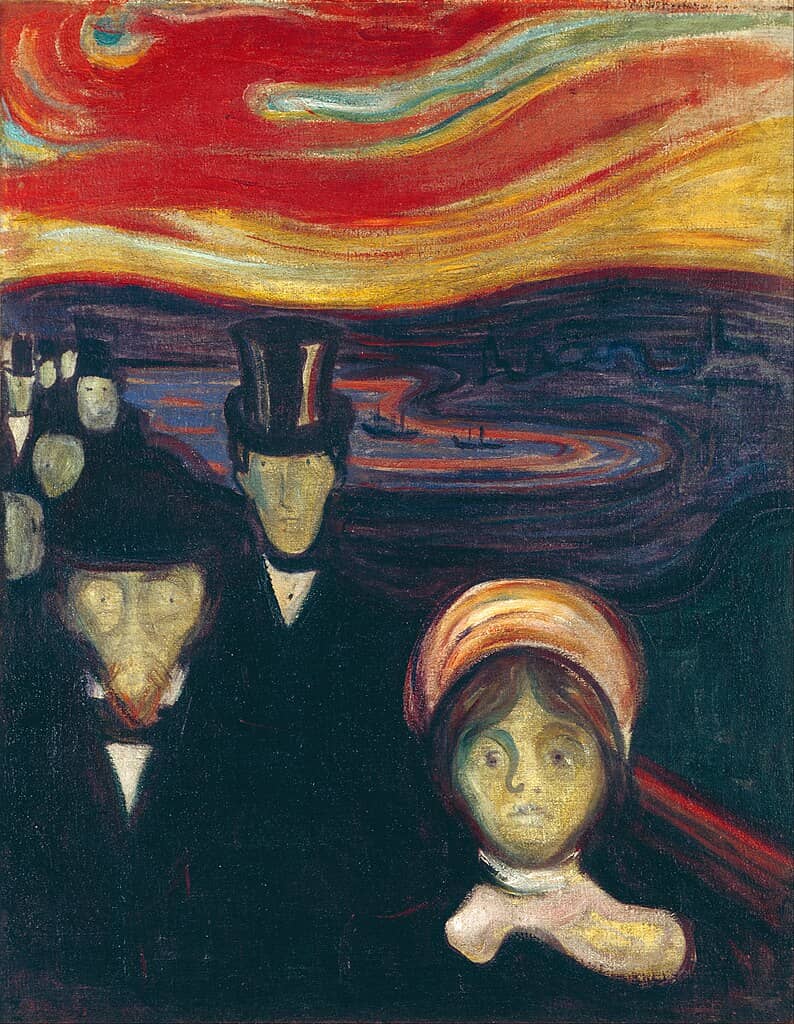
The existentialists understood this manifestation long before psychology gave it a name. Kierkegaard called anxiety “the dizziness of freedom”, the vertigo that arises when one realizes that every choice symbolically plunges us into the unknown. Sartre called it “anguish”, the recognition that we are responsible for ourselves, that no authority can absolve us. In this sense, fear can be seen as a positive phenomenon for it represents the sign that one is standing at the threshold of possibility.
Tragically for our creativity, fear often manifests as caution, prudence, meekness. It helps us convince ourselves that silence is safer than speech, that invisibility is safer than exposure, that craft is safer than authorship. We tell ourselves that the risk of being misunderstood outweighs the necessity of presenting the truth.
My view is that this affliction, with its pestering duality, is not just a mere psychological particularity but an emergent property of the individual in post-post-modern western society. It is as much the residue of class, of gatekeeping, of institutions built to recognize only certain types of confidence, knowledge, or behaviour, as it is the personal fear arising from formative familiar interactions and cognitive schema.
Some of my victories, such as the high thrills of having my 2nd year film school project screened at the Cannes Film Festival or the laughter of a packed theatre at the screening of my first comedy, have made me feel like I had earned my way into the ivory tower and served as a good treatment if not cure for my affliction. And then I moved to London. A city in which I knew no one, or at least no one from the world I had managed to gain access to previously. I found myself once again peering into the gilded labyrinth hallways of “the film aristocracy”. For all of its posturing around diversity, equity and inclusion, for all its meritocratic veneer, the UK film industry is an environment where cynicism often masquerades as sophistication, where genuine warmth or excitement is treated as naivety, where enthusiasm is seen as amateurish unless expressed within some pre-ordained formulas.
There were rooms in London where I could feel the temperature drop, the moment I spoke with my unplaceable accent and rhotic Rs. Events where I felt my background is silently assessed, my vocabulary weighed, my posture interpreted. The questions I often read on people’s faces in those rooms are not “Are they good?” but rather “Are they one of us?” or the even more duplicitous “Are they who we would like others to believe we welcome?” Every opportunity, every networking event, every conversation feels like it operates via unwritten rules that only those already inside are aware of. As if there was an unwritten social contract in which the wrong school, provenance, opinion, or cultural reference could mark you as an outsider and disqualify you from the opportunity of sharing human experience before you even have a chance to “plead your case”.
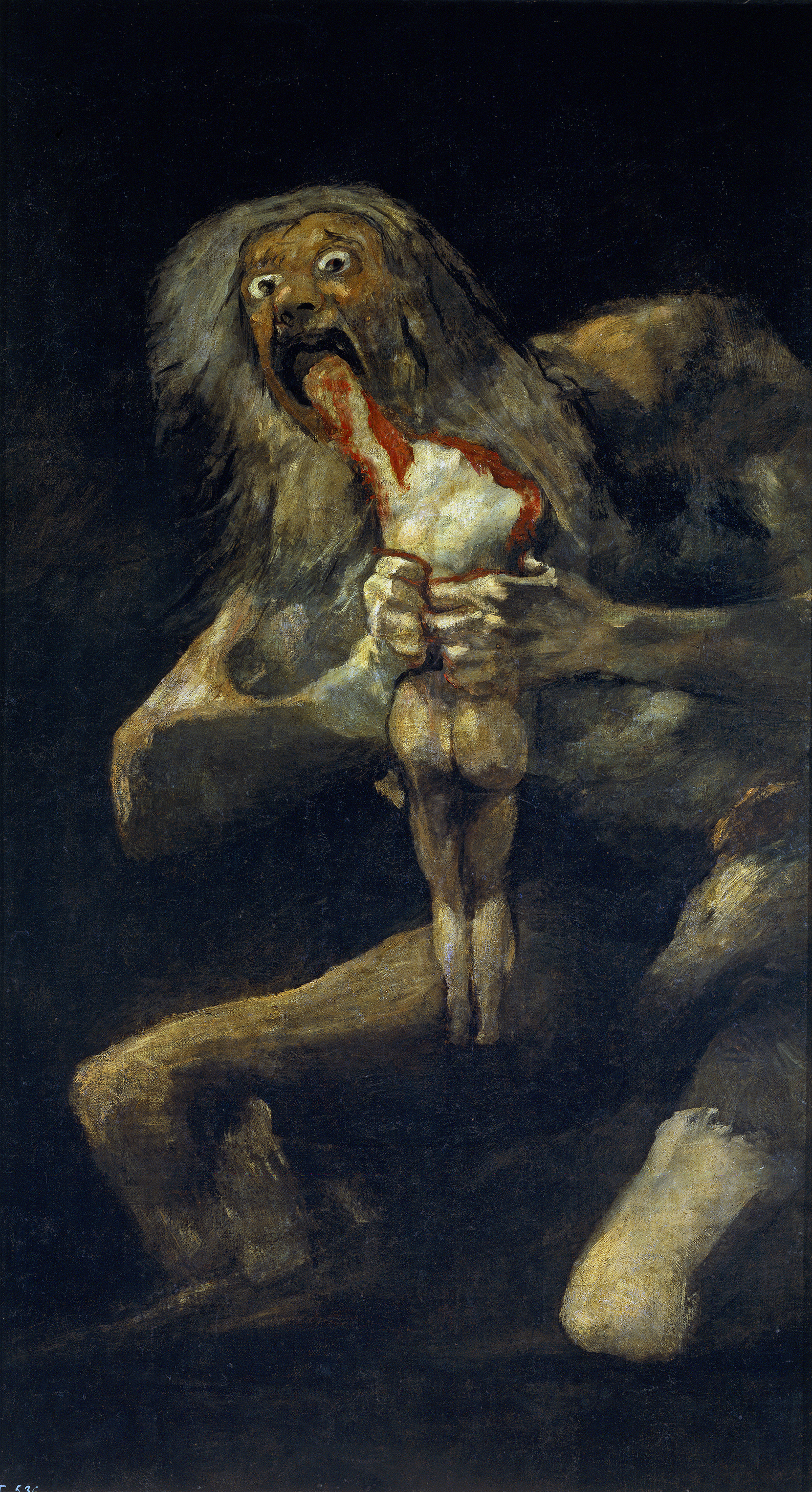
It is easy to see how, in such an environment, impostor syndrome is not necessarily a personal failing but a somewhat rational response. It is our minds’ attempt to make sense of a world that simultaneously signals that we are both necessary and unwelcome. We are hired for our skills but not embraced for our company. Intellectual cannon fodder for a dying industry consuming its own.
The endless churn of short-term contracts, the precarity of freelance life, the constant need to prove yourself can end up eroding even the strongest of minds. There is no continuity, no institutional memory, no stable community. Every job is a test. Every set is a new audition.
Compounding that with a world that increasingly prioritizes communication in byte-sized pieces, we are left with the constant concern of being misinterpreted, misquoted, mislabelled, and ultimately left jobless, and as such connecting back to the basic instincts and fears of the unconscious: the fear of hunger, the fear of the cold, the desire for shelter. In our society and current context, these fears morph into the fear of not being able to make rent while exercising your vocation or the fear that the world will not reward your hard work and focus, or that your devotion to your craft might not even translate into having access to basic necessities. We are left faced choosing security over meaning, derivation over innovation.
This is the cultural terrain in which my fear lives. It is not just a private neurosis but a collective condition. It is the bizarre terror that arises when you believe you are good, but you also know that “goodness” is not the currency that matters.
Part of my fear thus stems from having spent well over ten years in spaces I was never told I am allowed to enter but doing so anyway. I have been working in media, in entertainment, in this visual medium since I was about seventeen and yet, at times, I can’t shake off the feeling that I don’t belong here.
This is absurd and irrational yet, to reiterate, when you grow up alone, outside the sanctioned pathways towards artistic legitimacy, you rarely develop the tools necessary to ground yourself without simultaneously putting yourself down. When going at it from nothing, you learn quickly that talent and hard work are not enough, that those holding the keys to your future might doubt your authorship, your personality, or something as bewildering as your star sign. As such, you learn to anticipate: rejection before it arrives, critique before opening your mouth, doubt before it has had a chance to manifest in your beholder.
In these struggles, through the years, I’ve found a certain type of strength (if I can call it that), a type of destructive resilience. For the world can’t hurt me with its rejection if I’ve rejected it and/or myself beforehand. Critics can’t demolish my artistic outlook with their sharpened chisels if I’ve reduced the work to rubble myself. And if anything is left standing after the passing of this self-inflicted creative cataclysm, I can be relatively confident in the artistic merit of whatever remains. The tragedy of course is that this approach has a tendency to diminish one’s creative output and drown good ideas before they have time to properly surface.
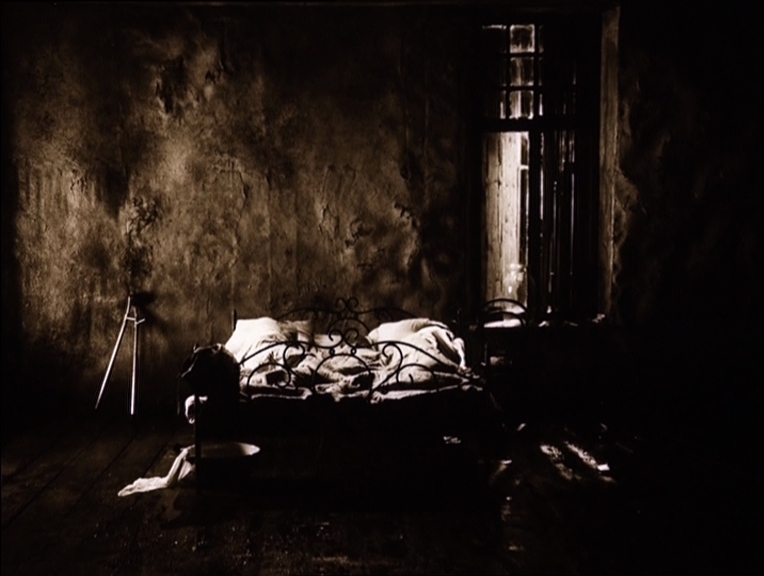
Through and by this mechanism I recognise that I have been using my fears as a shield, as a convenient alibi, as a justification for silence. I recognize the ways I have allowed the comfort of technical competence to substitute the vulnerability and curiosity that attracted me to this medium in the first place. Hidden behind the eyepiece of a camera I have the privilege of observing without the expectation of contributing meaning.
When wielded with purpose, the camera becomes an existential instrument. While filming, the operator must make a plethora of choices relating to angle, height, focal length, movement and more and through them in turn reveal one truth while potentially concealing many others conditions of existence itself. Our shots, their framing, reveal what we would like the world to see while cropping out what we deem unimportant or contradictory to that perspective. Thus, every shot is an assertion of taste, of judgement, of responsibility.
In this sense, cinematography has a large sense of built-in authorship. This flavour of it though, is still a form of authorship without confession, authorship without many of the risks explored above.
Yet when the fear is victorious, when the shots become an empty vessel of technological vanity, the camera loses its ability to explore and express being, time, freedom, selfhood and the world and becomes an overpriced witness of the operator’s insecurity. To operate a camera in this unassumed manner is to stand at the threshold of truth without crossing it. By its very nature the camera gives the person behind it a platform while allowing them to stay hidden.
In this seductive occlusion, in this philosophical-mechanical paradox, my absurd hypocrisy lies. I operate a machine of revelation while avoiding to genuinely reveal myself. I expect vulnerability from my subjects while protecting myself from the same. I ask the world to trust my eye while refusing to trust my own voice.
Camus wrote that the only way to confront the absurdity of existence is through revolt. To revolt is to decide to live by your own virtues, to act, to create, despite the crushing weight of certainty. Revolt in this context is the refusal to be paralysed by one’s fear, the resistance against the inner voice that tells you to stay silent. It is the determination on searching for meaning in a world that offers none, in a world that seems hell-bent to eschew even the possibility of meaning existing. Or to borrow from Milton: “The mind is its own place and in itself, can make a Heaven of Hell, a Hell of Heaven”.
To create and to take credit for your creation, be your creation art, journalism, engineering, education or any other work that can be engaged with by those around you, is one of the most fundamental manifestations of this type of revolt. It is the refusal to let anyone, anything, not even our own fear, dictate the boundaries of your reality.
All our life is an act of will, be it free or compelled, for we are free, with few exceptions, to at least end it. Whether your will and perspective come from the quiet precision of your interior life, from formative inertia, or from an existential necessity, whether it expresses itself as assertions of your taste, intellect and authority or through brutally honest and tender vulnerability, your will is the key to overcome the fear. For where there is a will there is a way, a determination that creates possibility: courage.
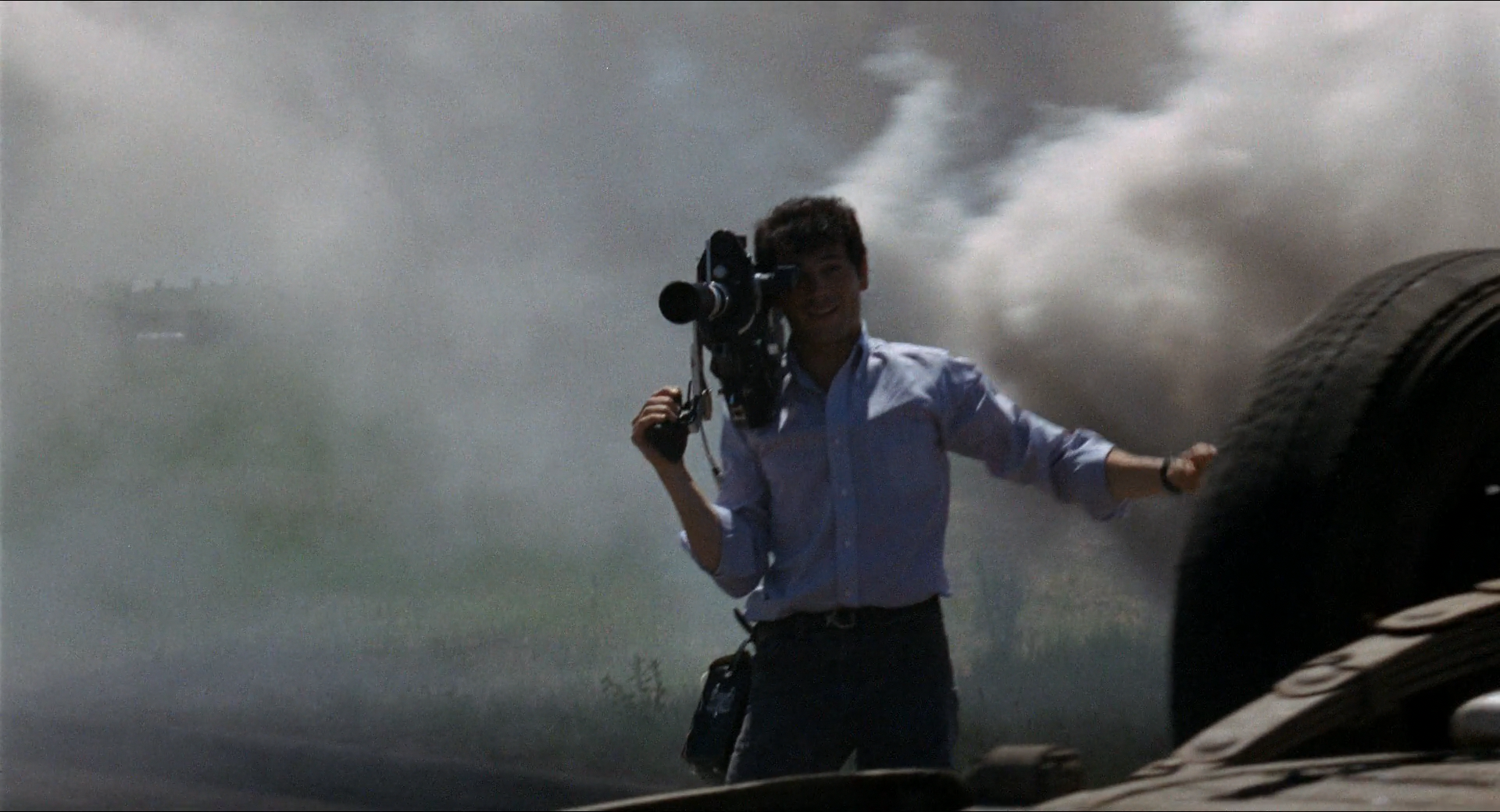
Now that I’ve expressed, if not fully explored, my fears, and looked at them through the plethora of thoughts I’ve been exposed to, the question becomes not how to eliminate fear, but how to move through it. How to act despite it. How to revolt and rebel against its rule. How to use it to give our actions meaning instead of it barring us from action, paralysed by The Fear. This reframing can place us back in control of our desires by exercising our will and manifesting it as courage. Fear thus becomes useful again, not as a visceral reminder of what has or can go wrong but as a warning that something matters, that we might be standing at the edge of meaning.
And while I lament the state of the world and the various coercions that trigger the fear, freedom itself is not the absence of fear, but the decision to act despite it. Thus, courage can’t be a property or feeling or something that can be given; it must be practiced. If courage is a practice, there can be a method.
The act of writing, and hopefully publishing, this text, is an acknowledgement of my own freedom and a step towards overcoming part of The Fear. What led me here, questioning, writing, sharing, is a life lived fully, with intent and, for the most part, freely despite my fears, inadequacies and limitations. And, since you have given me the courtesy of engaging so far in my internal polemic I feel I have a duty to share some of the methods that have helped me move forward when the shadow of fear and uncertainty loomed over my personal horizons.
In my formative years I had to learn how to be. While most children are feral beasts in one way or another until they get trained into the ways of the world, this journey took significantly longer for me. Sometimes I feel like I still haven’t arrived at a destination, but most of the time I pretend well enough to pass as human. To get to where I am now, I had to work a lot with exposure: exposing myself to what was outside my comfort zone, to what felt wrong (so many things did), to what unsealed me. I struggled a lot with various stimuli but the more I engaged with them, the easier it got for me to be able to cope with them.
The same principle could apply to creative work, to overcoming the anxiety of authorship, and to more easily sharing lived experiences. I encourage whoever is reading this to try making small steps towards embodying your truths. While at first you might not be able to face the larger monsters that you fear, you can still chip at the problem bit by bit. Confess one of your fears, one aspect that is hidden within you, privately to one person that you trust. If that is too hard, write a long-winded essay and then read it to yourself until you realize how unimportant any of this truly is. Try again with a human, for in each other we find strength and, many times, only from one another we can receive absolution. You might find that your reaction to their reaction will generate some internal momentum that will help you move on to a bigger risk, and then to another, and another, until what is left behind is a visible or internal body of work that can placate whatever critiques your internal monologue uses to conspire against you.
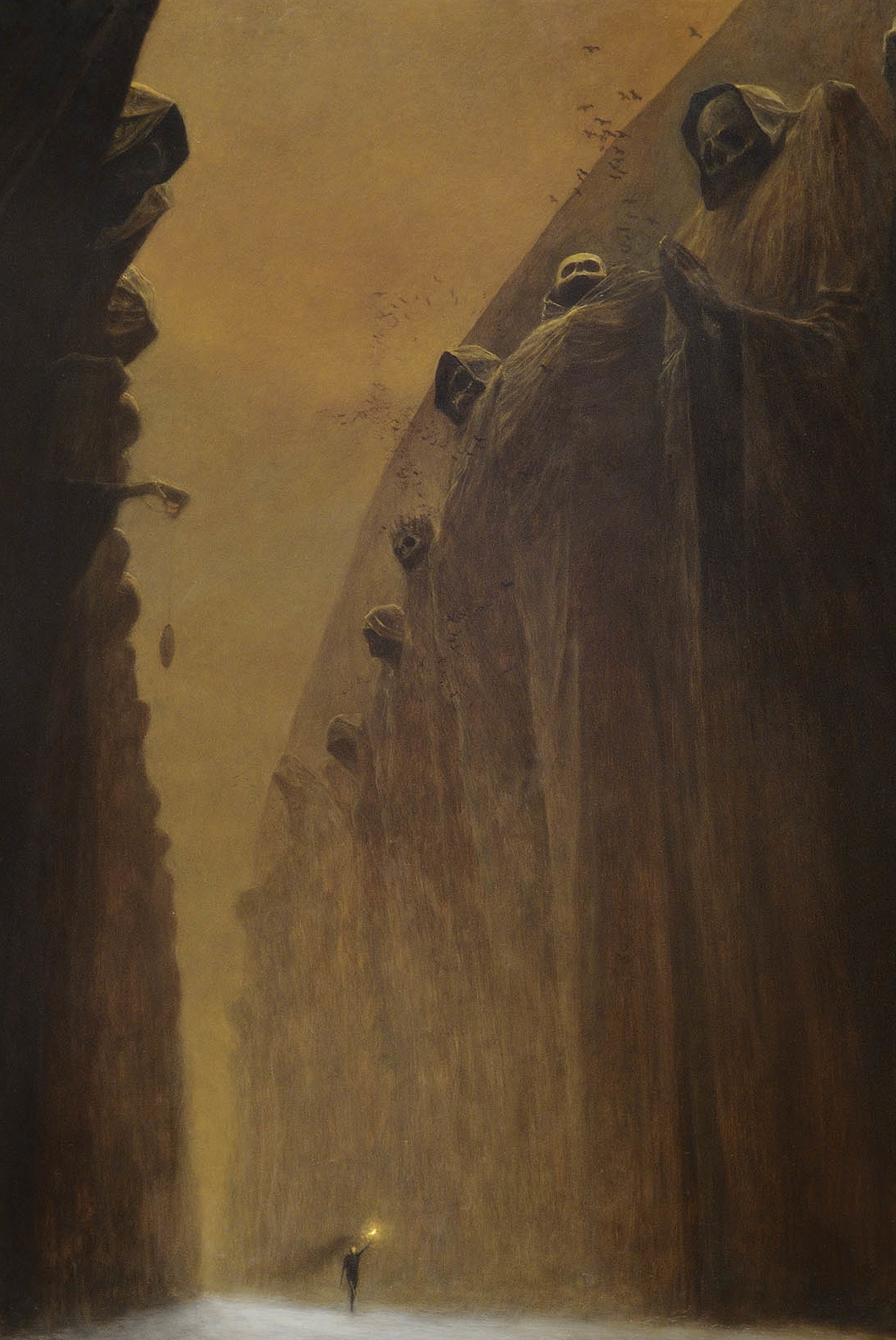
With every creative act that we make, with every word, note or image we hold dear to us that we commit to the public record, that feeling of impending catastrophe, that sense of nakedness should, in time, lessen.
The second treatment I would propose comes from stage performance theory. It is useful to think of one’s potential audience not as a faceless mass waiting to judge, mock, or reject you but as a person. A single consciousness. A pair of eyes.
What lies beyond that pair of eyes is as complex of a system of fears and desires as you find within yourself. They will be as confused about their purpose in this oddly timed adventure that we call life, potentially as scared as you are about their inevitable end, as insecure of what comes next, and as ignorant of what came before.
If you are to expect their understanding and kindness, you should connect with that person in your mind and try to deduce where and how their perspective might have been formed. If you have little or no tangible information to work from, use your imagination to fill in any blanks until you feel like you know them. If you are lucky, that person, be it their real or imagined selves, will resonate with your perspective, with and your commitment to whatever you are doing, and root for your success.
When the imagined audience becomes singular, rather than an amorphous plurality, fear loses its scale. It becomes manageable. It becomes human.
If this exercise fails, if you simply can’t make a reduction and connection, you can return to one of Sartre’s observations: to accept one’s freedom requires also the acceptance of the impossibility of total control. Or in the words of Palahniuk: “On a long enough timeline, the survival rate for everyone drops to zero.” Accept that you will be misunderstood. Accept that you will be judged. And, stealing from the same author, “It’s only after we’ve lost everything that we’re free to do anything.”
When starting from the bottom, the first peak to climb is not the uncaring world outside of us but the fear that keeps us from even putting our hiking boots on. To accept misinterpretation is to accept the burden of your own freedom. It is to accept the ambiguity of existence and rejoice in the freedom of stating your truth despite it.
To exemplify further: one of the most powerful stories of the last two thousand years, which has shaped the entire history of our species since the beginning of its proliferations, revolves around a man willing to be crucified for his beliefs, for speaking out against the tools of oppression. He challenged the status quo and paid the ultimate price, but in doing so, he created a path towards the possibility of redemption for those who believed in that perspective. Whether you are one of 4.6 billion people on this planet that has a version of this story as a part of their religious beliefs or not, it stands as a testament to the potential power of speaking one’s truth.
Moving beyond psychotherapeutic practice, performance craft, philosophy or Biblical examples; the hardest to approach methodologies that I’ve uncovered in my journey, that I could see leading to a more permanent solution to all that I’ve outlined so far, have to do with ego and community.
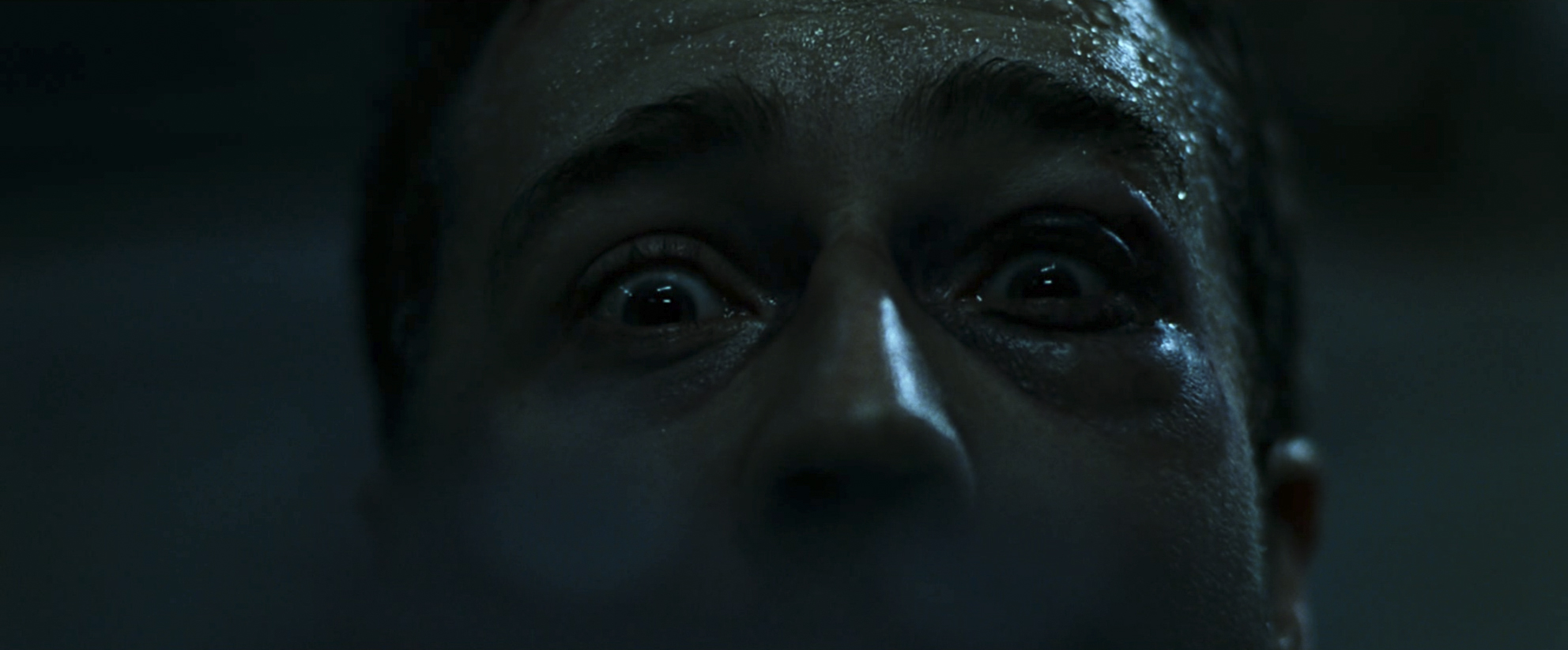
On one hand, throughout the years, I observed in myself an unhealthy tendency to let my self-image get entangled with my work, to let the work become a sort of barometer of my self-worth.
What has helped recently in this regard is another exercise in reframing: reframing the focus from the uncontrollable outcome in this indifferent and uncaring universe to the self-assessed quality of my commitment and performance of the underlying craft. This reframing takes the shield of competent technical execution that I was lamenting hiding behind earlier, and turns it outward as a spear against the fear and as an instrument of self-love. As long as you do the best you can, applying yourself fully with honesty and compassion there is nothing more in your control that can affect any outcome. While this could potentially lead to an overly lax approach, those afflicted with the varieties of fear I’ve been exploring are not at that great of a risk of falling into the trap of self-complacency.
Since this is something that has been working well in the outer-facing aspects of my Cinematography practice, in the same way that musicians can focus on technique and not their audience or dancers on the internal kinetic forces their bodies constantly face, the challenge then becomes finding ways to translate this type of approach to whatever it is that terrifies you.
Lastly and in conjunction with all the advice above, try to seek out life companions, partners and larger communities in the presence of which you feel comfortable exploring various aspects of your inner life, people you find it comfortable to discuss the fear with. It is a hard, risky process, but on the handful of times that I’ve managed to find these people they have become partners for life. They are the people I turn to when I can’t cope with how scary all of it is.
To exemplify, one could argue that “The French New Wave” and the “Cahiers du Cinéma” groups are two sides of the same coin: a way to survive the horror and absurdity of post-war France. Truffaut, Godard and Rohmer were not just colleagues but co-conspirators that both supported each other, challenged each other and held each other accountable for their shared love of what they thought Cinema should be.
While I haven’t yet found my scene, I’m sure that somewhere out there will be a number of artists that see the world like I see it. It would be a statistical anomaly for these people not to exist. My long-term goal then should be to seek them out; to bring them together so we may revolt in unison.
And so, we arrive at the place where giving into the fear stops being an explanation and becomes a choice. The place where we must decide: whether to remain hidden behind the apparatus or step into the arena and make ourselves heard.
While The Fear might never truly disappear, and maybe it shouldn’t in order to remind us of what’s important, we must find our own way to free ourselves from its control.
We free ourselves with courage, not the mythological kind sold by Hollywood and advertising, but the courage to act in the presence of fear. Courage is the refusal to let the trembling of the hand dictate the movement of the pen, the camera, the voice.
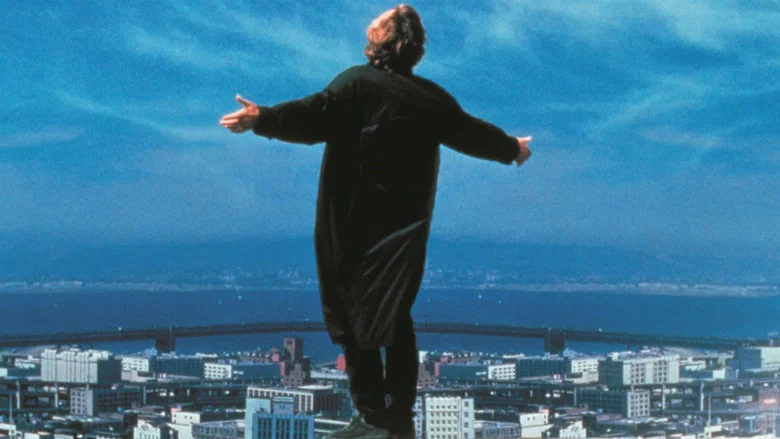
Every artist that we can name, and all the nameless ones too, know what I’m talking about.
Woolf wrote with fear in her bones.
Bergman directed with fear in his bloodstream.
Barthes wrote “Camera Lucida” with fear so profound it nearly broke him.
Fear is not the enemy. Fear is the companion. Fear is the reminder that you are alive, that you are thinking, that you are risking something real to you.
The enemy is silence. The enemy is hesitation. The enemy works through that small, internal voice that says: not yet, not now, not you.
To write, to make, to speak, to assert is to declare war on that voice.
What I asked of myself all those years ago when I dared to step outside my station for the first time with nothing much to lose, is what I probably wrote this whole text to remind myself and you of: we should risk being ridiculous, risk being disliked, risk being seen, or live an entire life wondering what could have been.
So, what if my mother will not understand my work? What is there to be truly lost when people roll their eyes? Why should I care about what the industry that gave us “Boss Baby” and more “Fast and Furious” films than anyone can reasonably remember or care for might think about whatever I bring into the conversation?
If people are unsettled by your work, then they are feeling something, as opposed to the bombastic nothingness or lethargic apathy interwoven with unexplained vitriol that our age seems to revolve around. If people are challenged maybe they will rise up to the opportunity and grow. If the work is actually bad, uninspired or just too niche, it will just be flushed down the drainpipe of history and forgotten by all but those who it actually managed to touch.
Art demands exposure.
Art demands vulnerability.
Art demands the willingness of the artist to present it and the risk of it being traced back to them.
If you are reading this, I’ve already won one of my battles in my war with The Fear. The act itself is victory. These words exist. The thought has been made public.
I will close with Bukowski:
“If you’re going to try, go all the way.”
Bibliography:
- Timotheus Vermeulen and Robin van den Akker, Notes on Metamodernism (2010)
- Neuroimaging research shows areas of the brain affected by fear: Neural correlates of fear
- Lacan describes the mother as the primordial Other who first interprets the infant’s screams in The Formations of the Unconscious, Seminar V (1957-1958)
- acedia (ἀκηδία) was first mentioned in the first Christian treatise on demonology from the 4th century, Antirrhêtikos by Evagarius of Pontus
- Søren Kierkegaard, The Concept of Anxiety: A Simple Psychologically Orienting Deliberation on the Dogmatic Issue of Hereditary Sin (first published 1845)
- Sartre’s discussion of anguish appears in Being and Nothingness (1943) and is also summarized in Existentialism Is a Humanism (1946)
- Albert Camus on revolt: The Myth of Sisyphus and Other Essays (1955) and The Rebel (1951)
- John Milton. Paradise Lost (2003 edition), Book I, lines 254–255
- Performance theory often encourages actors to imagine the audience as a single addressee to create intimacy and directness: Erving Goffman. The Presentation of Self in Everyday Life (1956)
- Themes of anxiety, fear and trauma pervade Woolf’s work, such as Mrs Dalloway (1925)
- Ingmar Bergman made a movie for each one of his fears
- Charles Bukowski, Roll the dice in What Matters Most Is How Well You Walk Through The Fire (1999)

Art and Filmography:
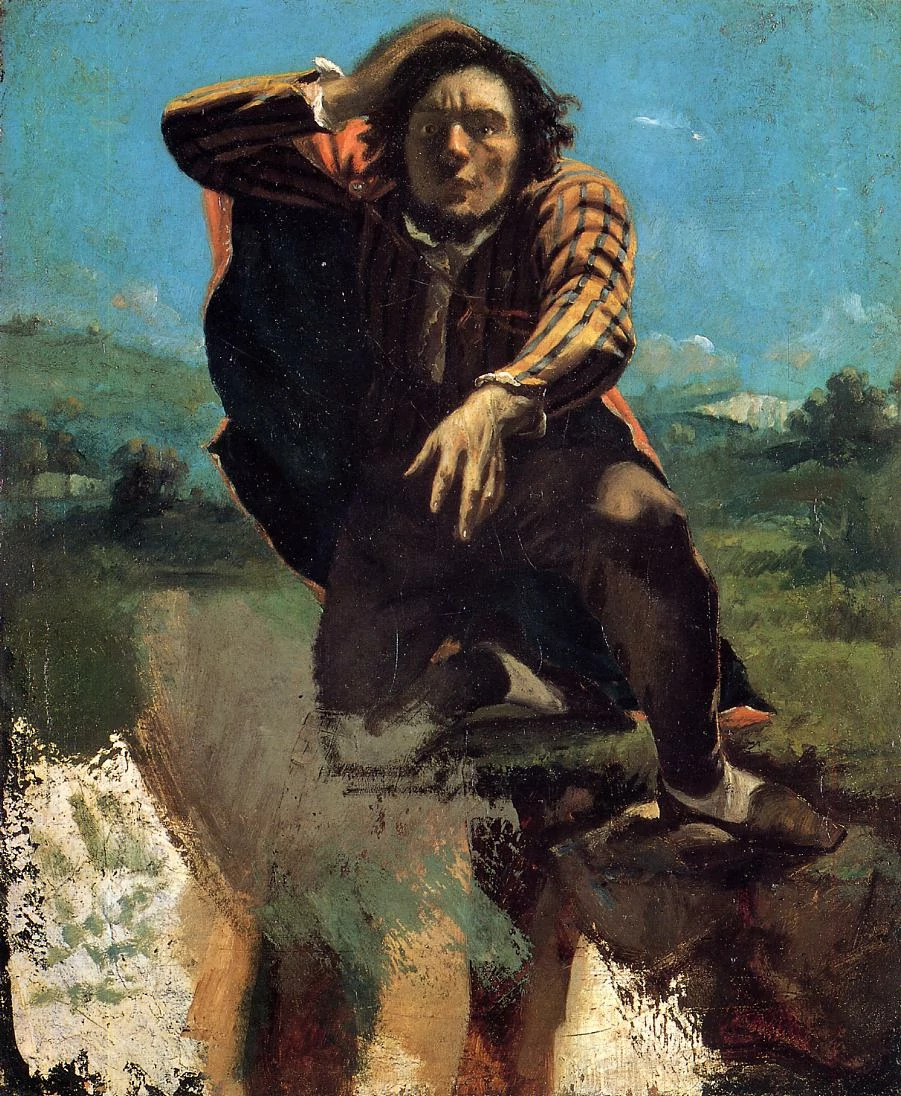
- The Desperate Man (1843), The Stone Breakers (1849), Man Made Mad with Fear (1843) by Goustave Courbet
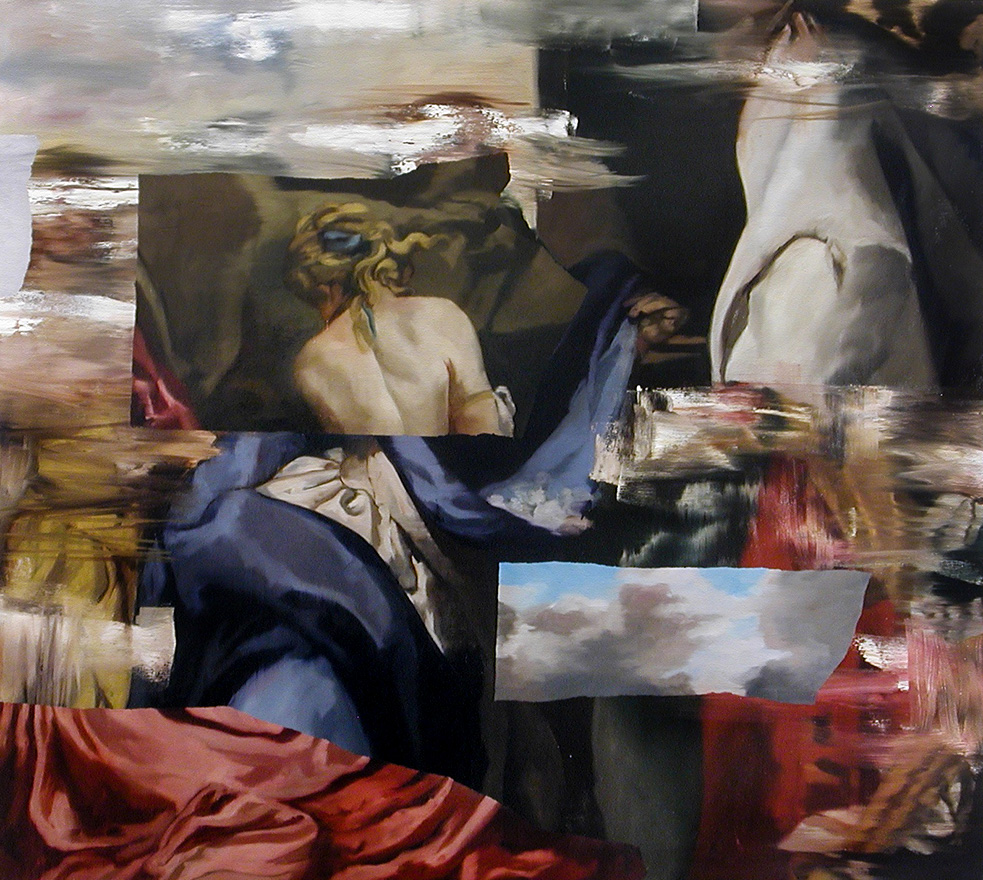
- The idolatry of Aphrodite (2005) by Simon Casson
- Anxiety (1894) by Edvard Munch
- Saturn devouring his son (ca. 1820-1823) by Francisco Goya
- Stalker (1979) dir. Andrei Tarkovski
- Medium Cool (1969) dir. Haskell Wexler
- Untitled (1972) by Zdzisław Beksiński
- Fight Club (1999) dir. David Fincher
- Fearless (1993) dir. Peter Weir
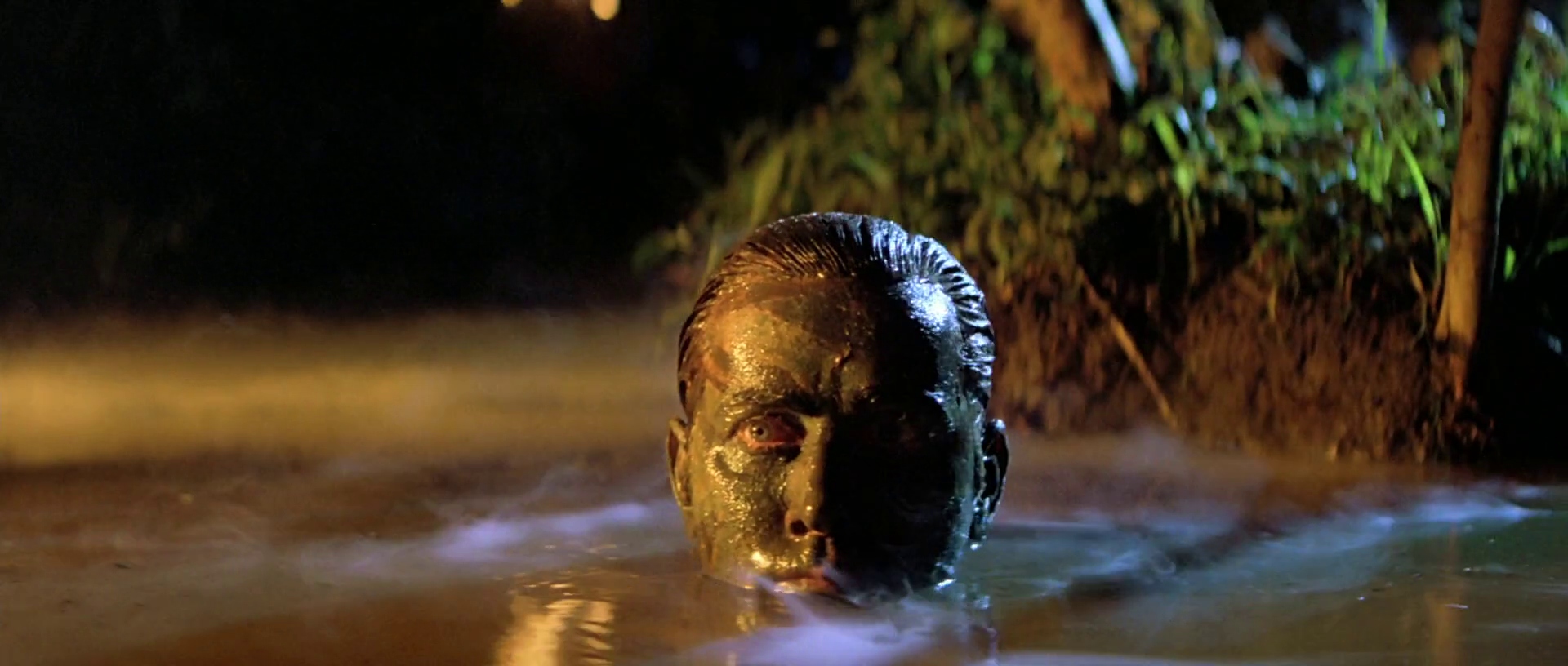
- Apocalypse Now (1979) dir. Francis Ford Coppola
To get notified about future posts please follow the RSS feed or subscribe via email below: